Showing posts with label News. Show all posts

Sunday, 21 September 2014

by Natasha Wong and Ayena Shaneez

Lightning is said to never strike twice, but this time it did. Just months after the disappearance of MH370, MH17 was accidentally shot down by Russian-backed rebels, 40 kilometers from the Ukrainian-Russian border in Donetsk, Ukraine. All 283 passengers and 15 crew on board were killed. This intensified the international spotlight on the Ukrainian crisis and brought the crisis to Malaysian soil by meaninglessly involving Malaysian lives. Like every international conflict, it needs to be looked at from different perspectives, and we here will let you have a glimpse at both, from the Ukrainian government and the Russian government.


PRO-UKRAINIAN


Ukraine only achieved independence from the Soviet Union in 1991. Ever since, it has experienced a faltering economy and a wavering foreign policy, until then-President Viktor Yanukovych decided to further relations with Russia instead of the EU. This provoked the people to protest against the government, with support from the US and Europe.


Once the corrupt Yanukovych was driven out of the country and his government toppled, Russian troops invaded and annexed Crimea in an attempt to salvage its influence in Ukraine. The pro-Russian separatists in Eastern Ukraine felt that Russia would give them better terms. Hence, they allowed Russia to claim territory. The rebels pushed further and further, gaining control over a wider area of Eastern Ukraine.


The new pro-EU government started a military operation to forcibly drive the separatists out of East Ukraine. It did not go exactly as planned, as the separatists manage to organise and launch a counteroffensive, cutting off government troops. The turmoil was taken advantage of by Russia, and they sent in troops and supplied arms to the rebels in Crimea. Reports came in that Russia had amassed some 20 thousand military troops near the border, and had shot an anti-aircraft missile.


With the amount of resources such as military strength and weapons they have invested in, Putin’s motives still remain painfully unclear. But ever since Russia’s annexation of Crimea, Putin’s approval ratings have skyrocketed. This is a huge change compared to the Russian public’s response to his possibly-rigged re-election in 2012 which sparked mass protests in Moscow. Ever since, Putin has started pushing an anti-West foreign policy, and an attempt to revive imperialist Russia.


When MH17 was shot down by the rebels, Putin was quick to cut all ties with them but the truth was already out: a civilian plane carrying 283 passengers and 15 crew hailing from Malaysia, Australia and the Netherlands were victims of the rebel movement that was supported and armed by President Putin. And they seem to have died in vain as the fighting has only intensified after the tragedy.

PRO-RUSSIAN


Ukrainians are divided into those that see Ukraine as part of Europe and others who see themselves as linked to Russia by historical bonds to the Russian Empire.


In Crimea, according to the 2001 Ukrainian Census, Russians make up more than half (58%) of the population, with 77% of inhabitants claiming Russian as their primary language. This shows that Crimea is a predominantly Russian state that wishes only to be reunited with Russia. There was even an illegitimate majority vote among Crimeans for them to become a part of Russia. So why not allow Crimea to be a part of Russia?


Meanwhile, Ukraine has seen a government overhaul, carrying out its own political revolution. The Russians have not approved of this change, refusing to accept the new 2014 interim government, with it siding with NATO. NATO or the North Atlantic Treaty Organisation, safeguards the freedom and security of its members through the use of political and military means. This means stopping Russia from colonising and ruling over surrounding countries, becoming more powerful than it is now.


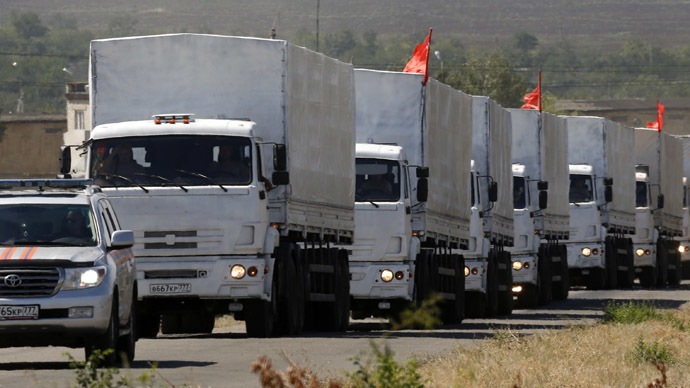
Russia has repeatedly called to consider peaceful talks to solve the fighting. Humanitarian supply trucks sent by Russia to help Luhansk and Donetsk civilians trapped in the fighting were delayed for a week after the Ukrainian government asked for different permits despite showing consent from the US and the Red Cross.


This war has killed at least 2,593 people since mid-April, not including the passengers and crew of our own MH17. 951 civilians were shot down and killed in the Donetsk region alone. In other dangerous sites, numbers remain inaccurate. The rebels are losing and Russia does not seem to have any clear plan ahead. Economic sanctions imposed by the US and the EU are pushing Russia to the brink of collapsing in on itself. However, no one from the West is intervening as it would bring the threat of a third world war that much closer to reality.


YOUR OPINION


After reading both perspectives, what do you think? Is one side more right than the other? Should they both be making a greater effort to achieve peace? What is Putin thinking? Well dear readers, only time will tell.


Friday, 22 August 2014

A NOTE FROM THE EDITORS

Typically our editors' notes are due in the early days of the month and obviously August's one is much overdue and for that, we apologize. We've been caught up in the tidal wave that is August - Founder's Day, FHC Prize Giving, not to mention YJC's own event- An Afternoon with the War Poets. 

We commemorated a centenary since the Great War or World War I the way we know best through literacy and design. And the words "Gas! Gas!" will forever be etched in our minds. To the students who painstakingly worked to pull off an event that some might have thought of as impossible, thank you. Thank you for the weekends spent painting posters and cutting out models and nights spent reciting poems.

In July, we persevered through the hard times. This month, we commemorate. We honour, we pay tribute to and we remember. Though tragic and truly so, both the anniversary of the first world war and the MH17 incident brings about more than just empathy, pity and solemnity. It urges us not to just remember them but to learn from them.

History is meant to teach us not to repeat mistakes of the past but if we look at the world today, war still prevails. Yet in these times, we must not lose hope. For the world has changed tenfold from centuries ago - new and improved technology, medicine, communication. War, conflict and peace is simply another big, tangled web of an issue but it can be unknotted. The shining heroes of the wars and tragedies of the past will not die in vain for they have shone the light to guide us to a peaceful tomorrow. 

The devastation of the MH 17 tragedy was one particular tragedy of a bigger war elsewhere that we will never forget. It is the epitome of the saying "When the rich wage war, it is the poor who die." This accident, has turned out to be a tragic, senseless, loss, another number in the casualties of war statistics. Another reason why it is so important that we learn and pray for the victims, who have at last returned home.

In commemoration and respect to the lost lives, we will remember and will forever carry them with us in our hearts.


by Anonymous 16:24 64 comments | in , , , , , ,
Read More

Monday, 21 April 2014

Golf, for the most part, has historically been considered a men’s sport. In the ASEAN region, this is especially true with barely an opportunity for women to break into this exclusive men’s club. With this in mind, the Queen Sirikit cup — officially known as the Amateur Ladies Asia-Pacific Invitational Golf Team Championship — was founded.

At the time, no international ladies’ event existed in the region. Knowing that there were many female golfers with great potential but insufficient resources, one of the founders of the Malaysian Ladies Golf Association, Rae-Vadee T. Suwan came up with the idea to launch a national team championship to give these women a chance to further their game. They would be able to compete at higher levels and accomplish more for themselves and their countries.


Hence, the first Queen Sirikit Cup was approved and held in Bangkok, Thailand with 9 countries taking part. Today, 13 countries take part in this tournament — Australia, China, Chinese Taipei, Hong Kong, India, Indonesia, Japan, Malaysia, New Zealand, Philippines, Singapore, South Korea and Thailand. 

The 36th Queen Sirikit Cup Championship was hosted by Malaysia in April at the Saujana Golf & Country Club. It was the 3rd time the Malaysian Ladies Golf Association had hosted the event since 1985.


It is a great honour to say that Cempaka Schools was asked to coordinate the opening and closing ceremony of this international event and that I was to be a part of it. Alongside Nadia Marissa, Auriel Yeap, Chua Zi, Samantha Lee, Anishaa Jeyakumar, Mithali Mittra, Edryna Zarif and Jia Xin, we were asked to perform a cultural dance piece for the opening ceremony. Choreographed by our dance teacher, Gloria Patie, it incorporated traditional Malay and Indian elements, while accompanied by Chinese drum players and percussionists.


One of the highlights of our performance for me was having to dance in the rain. Remember that one scene in Step Up 3 where Moose was dancing in the battle against the Chinese crew and the water was splashing everywhere and you thought it was the coolest thing ever? (you probably still do, because I know I do). That was how I felt. Despite having to face the fear of slipping and falling while dancing on top of the Chinese drums, it was our best performance of the choreography and one of my favourite dance experiences.


Students from all 3 campuses were also picked to sing the national anthems of all the countries. Kudos to all the performers for being able to learn a national anthem in a different language. I think we can all agree, the theme song ‘Women’s Spirit’ as sung by Savira Putri, Ashlyn Chin and Adeira Ariez was by far the most catchy song we have heard in a while.

Calypso Jam. If you do not know what that is, youtube it. Now after listening to it, picture Mr Gerald grooving to it while playing the violin. Best image ever. All performers should learn to perform like him. The amount of passion he has for the instrument is astounding. Next up was a percussion item. Percussioning is a skill I will never be able to master.


I had so much fun performing and I am glad I agreed to take part in this. On the bus ride back, all I could think about was the nostalgia I was going to get from this. Enjoy the short clip below taken during one of our rehearsals! 


PC: Sharizah Shihab, Class of 2014

by Anonymous 21:59 55 comments | in , , , , , ,
Read More

Monday, 6 January 2014

by Lee Ting An, Junior 1 Higgs, Class of 2015

1950. We are the people of South Africa: Xhosa, Cape Malay, Bantu and various other ethnic groups, whose families are torn apart simply because of the tone of our skin. ‘Divide and conquer’. The Nationalists who govern my country understand that concept well. The Group Areas Act forcefully ends the era in which we lived side by side.

1958. Any call for change is banned by the Suppression of Communism Act. We are torn from our land and transferred to resettlement camps where we are left to rot.

Unceasing propaganda slowly molds the perspective of the white man — the ruling class. We are the lower class — scum who are prevented from doing any form of skilled work.  The lower class who exist to perform menial hard labour, and for which education, the bane of dictatorship, is deemed unnecessary.

1970. We are the blacks, whose roots lie in the native tribes of South Africa. We may not ride the same buses, pray at the same churches, attend the same schools, or eat at the same restaurants as the white man. A state of emergency is declared and we are stripped of the rights that we, the original citizens of South Africa, possess. It is against the law to protest or go on strike. Imprisonment and indefinite detention without a trial is legalized.

Our children are born into a world where you obey every order of the white man. We carry identification wherever we go, facing arrest if we fail to produce these documents if asked; a cold reminder that we exist at the bottom of a tyrannical system built on racism. But we will fight, as long as it takes, for freedom.
__________


Nelson Mandela was the leader of the South African anti-apartheid movement. He devoted his life to achieving democracy in a nation so racially biased that his legacy has lived on for generations.

Rolihlahla Mandela was born to the Thembu people of the indigenous Madiba clan of kings on July 18, 1918. His biological father died when he was nine, but memories of him were recounted in Mandela's autobiography, ‘The Long Walk to Freedom’. In his earliest years, he lived in relative luxury until his father, chief of the tribe, was summoned to appear before the local white magistrate after a complaint had been lodged. He refused, and this act of defiance cost him his land, title, and a large sum of his fortune.

Much of Mandela's childhood was happily spent in the rolling maize fields of the Qunu village where his life wasn’t yet touched by apartheid. Here, his African roots grew deep in a land rich with culture, customs and rituals. He enrolled in a primary school where he was given the name Nelson by his English teacher. He spent his time playing with the other boys, reenacting the great battles of his ancestors in a youthful approximation of war in large, open grasslands.

"I was not born with a hunger to be free. I was born free. Free in every way that I could know. Free to run in the fields near my mother's hut, free to swim in the clear stream that ran through my village, free to roast corn under the stars… It was only when I learned that my boyhood freedom was an illusion that I began to hunger for it."

Upon his father’s passing, Nelson was adopted by Regent Jongintaba (chief of the Xhosa at that time) to ensure that he was educated enough to counsel the future Xhosa chief. However, Nelson Mandela was temporarily expelled from his university for refusing to withdraw his resignation from the Student Council. He was sent back home, but in a few months and in yet another streak of rebellion he ran away from home with his brother when the regent arranged marriages for the both of them. 

After traveling from acquaintance to acquaintance, staying as long as their hospitality extended, he finally found a job as a clerk at Witkin while he completed his B.A. degree in law to become a clerk or civil servant; there was no higher position for a black man at that time. It was there in the city of Alexandria, that he met the many important people that feature in his life, including his first two loves and fellow anti-apartheid activists. Truth be told, only when he left behind his roots and strayed from his path did his life begin to flourish, and his story begin to unravel.

"There is no passion to be found in playing small, in settling for a life that is less than the one you are capable of living."
__________


The apartheid, literally ‘separateness’ in Afrikaans, was the racial-segregation system adopted by the Afrikaner National Party when they won the elections in 1948. 

After becoming increasingly interested in the politics of his rapidly dividing nation, a 20-year-old Mandela joined the Youth League of the African National Congress — the most prominent party at the time that supported black rights — where he quickly rose through the ranks. With a few others, he came to lead the small group of young, spirited activists who agreed that, against an opponent like the Afrikaner National Party, their previous tactics of polite petitioning would no longer garner results. 

Mandela and his colleagues proceeded to orchestrate non-violent protests around the country in a series of events known as the Defiance Campaign. In his book, he says that they used boycotts, work strikes, civil disobedience and ‘general disobedience’. When staying out after curfew, they would inform the policemen in advance that they were going to be out and accepted their arrests without any resistance. When carrying out strikes, the authorities would be told exactly when their workers were going on strike and why they were protesting. Though some insisted that it was time for violence to show that they meant business, Mandela correctly predicted that any violence on their part could not stand up to the immense power of the Afrikaners. More importantly, it would lead to unnecessary harm and loss of life. Anyone and everyone who felt that the time for reform had come joined in on the peaceful protest - the war though in its infancy, had begun.

“The doors of the liberation struggle are open to all who choose to walk through them.”

Though the the government still remained firmly rooted in power after the campaign was over, it was never the intent of the campaign to overthrow the government. What it was meant to achieve was to show the people of South Africa that they had a voice; a chance to speak in their own country, to express their opinion and show their displeasure. Undoubtedly, it was a huge success, and the number of ANC supporters swelled from 20,000 to 100,000 people from all around the nation. But what scared the government the most wasn’t the sheer volume of people - it was the fact that all the races, whether Black, Indian, or Coloured, were working together against a common purpose: them. The apartheid was meant to segregate, to separate. The leaders of the ANC, Mandela included, had to work hard to pull all the races together despite disagreements and arguments. They succeeded, and thus formed the beginning of the end of the apartheid, the first steps of a long journey to liberation.

"No single person can liberate a country. You can only liberate a country if you act as a collective."

Eventually, the government struck back. One night in 1956, simultaneous arrests of 156 different ANC leaders and activists were carried out throughout the country. This sudden arrest, unexpected and surprising, was only the first of Mandela’s many stints behind bars. They were charged by the government with high treason, but the main accusation was the use of violence.  Although the ANC had up till then had never participated in violent acts or encouraged violent behaviour, the government was still convinced that they could (despite their rather pathetic evidence) charge them with treason. Mandela who had previously worked as an attorney along with a group of very capable lawyers managed to fight the case. All 156 of them were released.

The government however, was not finished yet. A state of emergency was declared in South Africa. Now even walking around without a pass was deemed an offensive act which could get you arrested and sent to jail. This show of brute strength by the government peaked one day in 1960, during what is still remembered as the Sharpeville massacre. The PAC, a different group of protesters with the same purpose, organised a public burning of passes in several locations around South Africa, and one particular protest in Sharpeville was met with extensive violence by the authorities. It is a tragedy still remembered to this day, where the peaceful protest of thousands of blacks was shattered by the police. Nervous, confused and perturbed by the massive crowd of angry yet, disciplined group of people before them, the police opened fire. 69 people died, almost all with gunshots to the back: they were shot as they fled and ran away. It was the spark that lit the fire of violence in South Africa. Mandela, who’d always petitioned for non-violent methods, realised it was a tactic which usefulness had run dry. Fuelled by the fury and sorrow of the people, he formed the famous militant branch of the ANC: the Umkhonto we Sizwe, literally, ‘Spear of the Nation’. The time to fight for their freedom had come.

“The time comes in the life of any nation when there remain only two choices – submit or fight. That time has now come to South Africa. We shall not submit and we have no choice but to hit back by all means in our power to defend our people, our future, and our freedom.’

Nelson Mandela was often compared to Mahatma Gandhi and Martin Luther King - both of whom were freedom fighters who preached non violence. However Mandela himself admitted that he was very different from these men, no matter how much they inspired him. For them, non-violence was a matter of principle. Their firm adherence to peaceful protests to achieve freedom were their defining aspects. In retrospect, Mandela often referred to himself as a strategist. As much as he did not wish to harm, he would willingly do so to achieve his means especially when all other options were exhausted. Violence, as much as peaceful protesting, was a tactic used to reach his goal.   When the Umkhonto we Sizwe was formed, its primary purpose was sabotage; Disarming strategic locations around the country such as power stations with minimal loss of life. However over the years, the number of casualties and deaths inevitably grew. Some people hence regard him as a terrorist - a controversial issue, holding him responsible for the loss of life. Yet Mandela has never said he was not guilty of violence. He never claimed all his actions were peaceful, never claimed he was not accountable for the deaths caused under his leadership. His armed struggle was controlled and calculated. For all people whitewash or besmirch his past, his legacy is testament that for violence, there is no clear answer. No clear line between black and white. Though it should be only the final option and the last resort, it may just have been a necessity.

“I do not, however, deny that I planned sabotage. I did not plan it in a spirit of recklessness, nor because I have any love of violence. I planned it as a result of a calm and sober assessment of the political situation that had arisen after many years of tyranny, exploitation, and oppression of my people by the Whites.”

After forming the Umkhonto we Sizwe also known as MK, Nelson Mandela was outlawed. He traveled from safe house to safe house throughout the country while organising and reading banned manuals on guerrilla warfare and tactics, with principles gleaned from strategists like Mao ZeDong and Che Guevara. Mandela was sent to various places around the world to ask for weapons and funds to support their cause, garnering mixed responses, and finally to Ethiopia, where he underwent a course of strenuous military training that was rudely cut short. He studied the rudiments of combat, military science, and trained as a soldier before he was called back to South Africa after two months - the revolution was beginning to take off, and it wanted it’s commander back at the helm. Traveling back to Africa under a fake identity, he returned to his hideouts where he was arrested by policemen who were suspected to be tipped off. Initially, he was arrested for leading the worker’s strikes and leaving the country illegally without a passport (or at least, a real passport). He was to be imprisoned for five years, and he was in jail for around nine months when policemen raided the hideout of the High Command of the ANC and the MK. There they found documents and paperwork involving their use of sabotage, and more importantly, the documents outlining their contingency plan to use guerrilla warfare or terrorism should the government response to their sabotage evolve to a full-blown war. Several other prominent ANC and MK leaders were arrested and temporarily sent to jail while awaiting judgement. They went to court in what is probably the most famous political case in Africa’s history: the Rivonia trial.

“From that moment on we lived in the shadow of the gallows. The mere possibility of a death sentence changes everything.”

The aptly described ‘trial that changed South Africa’ is named after the suburb where they hid and worked, Rivonia. The accused were not just blacks. Testament to the cooperation and colour-blindness of those who led the ANC, there were blacks, Indians, and even white Jews among the accused. For two years, Mandela and his fellow accused fought the case in court, facing an impending death sentence. Although the state’s case against them was riddled with holes and fake evidence, in his famous speech Mandela did not attempt to plead not guilty, or even deny his actions. Instead, he confessed to founding the resistance, leading the ANC, (which had been banned and deemed an illegal organisation) and organising sabotage around the country which had led to unwilling loss of life. 

Unencumbered by the stern penalty he would most likely receive, he then went on to condemn first the court for the prejudice with which the trial was conducted, the government for its unfairness against the people of South Africa, and then the whole system for its blatant racism and oppression. Finally, after speaking for three hours straight to a riveted courtroom, he delivered his often-quoted closing statement, looking his accusers straight in the eye.

“During my lifetime I have dedicated myself to the struggle of the African people. I have fought against white domination, and I have fought against black domination. I have cherished the ideal of a democratic and free society in which all persons live together in harmony and with equal opportunities. It is an ideal which I hope to live for and to achieve. But, if it needs be, it is an ideal for which I am prepared to die.”

Though death had seemed the undisputed outcome of the trial, the government had faced growing international pressure from countries who supported the anti-apartheid movement. Fearing the combined wrath of the people and the countries who argued against their execution, Mandela and his fellow political prisoners were instead sentenced to life imprisonment. By then, they were no strangers to prisons. The harsh way of life, living with no freedom and under constant scrutiny from guards and wardens was experienced by many freedom fighters of the day. The prisoners were sent to Robben Island, which despite its scenic beauty was heavily guarded by the jailers and waters surrounding the prison. Life at the prison was at first brutal: living conditions were poor and the guards spared no expense in making their lives more miserable. For many years hard labour was part of their daily routine, mining limestone under the hot South African sun. In a cell only five metres square with no proper bed or desk (in the early years), they received their meagre meals which consisted mainly of diluted pap (porridge). Yet over time, conditions began to improve as they fought against the treatment they were receiving and as they gained international attention. Mandela organised strikes and talks with the head of the prison and several outside organisations like the Red Cross, and eventually they received the treatment they deserved.

“No one truly knows a nation until one has been inside its jails. A nation should not be judged by how it treats its highest citizens but its lowest ones.”

The prisoners were later transferred to two other jails during the course of their imprisonment, which came to an end when Mandela entered negotiations with South Africa’s new president, Frederik Willem de Klerk. Though he was a white, Frederik was a firm anti-apartheid supporter and initially offered many times to free Nelson Mandela in the interests of preserving peace. However, his attempts were met with refusal. He disagreed again and again when the president offered to free him, and instead, he began negotiating with the him on ending the apartheid.

“For to be free is not merely to cast off one's chains, but to live in a way that respects and enhances the freedom of others.”

And truly, the rest of his life is history. After the murky past that Mandela’s earlier years cleared up, the rest of his meaningful life is much more well known. His negotiations with the president succeeded. Through peaceful means, the reign of the apartheid was finally brought to an end as the cruel laws were taken down one by one. Both men won Nobel Peace Prizes on 1993 for their work. Mandela was released from jail on February 1990, where he returned to lead ANC and negotiated the first election in South Africa where every race could participate and cast their vote. He became South Africa’s first democratically elected black president - the first black ever to become president of South Africa with the full support of every person in the country. Not just the blacks, but the Coloured, Indian, and even the White minority - and with good reason. Nelson Mandela was a man who worked tirelessly to free his people and would resort to any means possible to do so. As much a strategist as a compassionate man, one cannot deny he has caused hurt in attempting to liberate his country. However one also cannot deny he himself endured much suffering and faced many trials on his journey, often neglecting his family to serve his country. He was, and even despite his recent passing, still is, a symbol of dedication and freedom to his people, who can now live freely thanks to the efforts of great men like him. Nkosi Sikelel' iAfrika. God bless Africa.

“I have walked that long road to freedom. I have tried not to falter; I have made missteps along the way. But I have discovered the secret that after climbing a great hill, one only finds that there are many more hills to climb. I have taken a moment here to rest, to steal a view of the glorious vista that surrounds me, to look back on the distance I have come. But I can only rest for a moment, for with freedom come responsibilities, and I dare not linger, for my long walk has not ended.


by Anonymous 13:57 202 comments | in , , , ,
Read More

Friday, 29 November 2013

by Nur Habibah Ishak, Junior 1 Cempaka, Class of 2014

Urbanscapes — one of the most highly anticipated arts festivals in Malaysia. This November, I had the chance to attend my first one yet and I had the most enjoyable weekend hanging out with friends, discovering new food vendors, and enjoying the truly amazing music and art scene. Most notably, I was able to witness a fashion show of sorts.


We were given carte blanche with the dress code and simply wore whatever we wanted. Taking advantage of said freedom, there were some pretty crazy outfits out there. On the first day, I made the mistake of not wearing long socks with boots which I regretted later that night after arriving home to find blisters just above my ankles.

Given the furnace-like temperatures that Malaysia constantly attacks us with, the weather on the day wasn’t all too bad, if a little humid. The sun that day was thankfully more forgiving than usual and by the time night came, the air was nice and cool. That being the case, many of us took advantage of the cooler weather, not confining our fashion choices to the simple loose top and shorts.

Size is everything when it comes to bags. During festivals, the smaller the better. Unless you're trying to keep an unwanted pair of hands off you, you surely wouldn't want to hit someone on the head with a large sack in the middle of a concert. It being a concert, jumping around and energetic waving is inevitable. Most people were seen with cross-body straps (ideal for dancing), a mini backpack or a drawstring bag. Having said that, zippers are your best friend for keeping your belongings safe. My purse and bottle fell out of my bag as I was jumping along to Franz Ferdinand. I was very grateful when the person behind helped me notice that.


For festival-goers, rather than going in sandals or slippers, a trusty pair of boots, wellingtons or closed-toe shoes will do a better job of protecting your toes from being crushed. If not, you'd better come prepared with some plasters. Concert goers can get rough and when lost in the music, no one really pays attention to their surroundings.


Between the bags and the boots, all other apparel is basically ruled under ‘Anything goes’. There was a parade of denim shorts, bold accessories, patterns, sequin items and bright colours. Every person was savvy in their own way and it was certainly something unique to catch during events like these. 

Photo credits: Urbanscapes / The Spacemen

by Anonymous 22:12 134 comments | in , , , , ,
Read More

Thursday, 28 November 2013

by Dave Ryan Aguirre Buaron, Special Projects Officer-Community Manager, Cempaka International Schools

Dear fellow Cempakans,

Most of you are probably wondering who I am. I am your Special Projects Officer-Community Manager, in-charge of our school’s Social Media. Today however, I will not be lecturing you about digital media but something more personal, something more intimate.

At half past midnight on the 8th of November 2013, I received a call from my mother. A call that I knew I would be getting sooner or later. After suffering more than six months due to cancer of the urinary bladder, my father passed away. I was devastated. But I really did not have the time to mourn. I was alone in my apartment with my two cats, and my father’s passing made every moment even lonelier. It wasn’t over however. 

At this time, I knew from news all over Twitter and Facebook that a very powerful typhoon was roaring towards my country. And my hometown and surviving family looked like they were right in its direct path. I frantically contacted my mother and sister to make sure that our house was secured, and that they and my father's body were safe. In 2008, our house was flooded during the onslaught of Typhoon Fengshen. I did not want to relive the memories of not being able to contact my entire family for two whole days again.

You see, typhoons and earthquakes are common in the Philippines. Not only do we sit on the Ring of Fire, but we are also right on the path of typhoons forming in the Western Pacific. In one year, we average 20-30 typhoons strikes. However, Haiyan (or what we call Yolanda, as we have a different naming convention for storms entering the Philippines) was different. The ferocity of which, was unmatched in recent memory. With winds gusting around 380kph and sustained winds at 315kph, it’s equivalent would be standing at the back of a jumbo jet taking off. 


I had already booked tickets prior to my father’s passing. I meant to go home on the 13th of November - a day before my father’s birthday, and mine. Due to debris on the runway, the airport was shut down for three days, and I had to move my flight to the 11th when commercial flights were allowed to land. When I landed in Manila, I went to the Philippine Airlines office to have my tickets coming back to be moved as well. One of the people queueing was a man who worked for the immigration. 

When I asked him where he was going, he replied that he was looking for flights to Tacloban or anywhere nearby. When I asked how his family was, he replied that they were still looking for them as there was hardly any communication coming out from the city of over 200,000. I tried to reassure him that perhaps his family was fine after all. To which he said that their house was right in the hardest hit area of the city. From the sound of his pained voice, he seemed resigned to the fact that he had very possibly lost ten members of his family. He then recounted to me how corpses were floating out in the bay and under the scenic San Juanico Bridge. There were too many bodies laying about with nobody giving them a proper burial. The grisly stories coming out definitely gave me a different perspective about my own personal loss.


I finally got on an earlier flight to Kalibo, my hometown, over 450 kilometers south of Manila, and there were only 14 passengers on that plane. I did not even know we were about to land because the entire city and province was pitch black - only a few buildings with their own generators had any light in them. The darkness was oppressive. On my way from the Kalibo International Airport to the funeral home where the wake was being held, I could see the outlines of fallen trees, electricity posts and damaged houses in the dark. When I got to the funeral home, I met my mother, sister and my father. We were using our own family’s generator which my father bought in 2008 after Typhoon Fengshen to ensure there was some light in case of emergencies. 

I looked out onto the balcony where I was confronted by darkness. Usually around this time of the year, the entire country is filled with twinkling Christmas lights. The Philippines celebrate the longest Christmas season in the world starting from the 1st of September until the first week of January. But there was none of that this year. At daybreak, I saw visible damage in some parts of the town centre, more noticeably along the outskirts and the river where houses made of light materials were partially to totally damaged. Thankfully, ours was fine. I visited the coastal village where I was born and majority of the houses sustained a significant amount of damage, including my late grandfather’s house which was pretty much destroyed. I haven’t been there since 1998. I visited the school which my father helped build and saw their school canteen damaged and the oldest room had lost parts of its roof. 

The next evening, relatives told me that the Congressman’s men went to the village to distribute relief goods, but only to their political supporters. I was furious. How can they politicise aid? We are talking about the lives of people here. For the most part when I was in my province, I did not see any visible nor even rushed relief efforts to help the victims. In fact the local Commission of Audit denied a request by a local council to release relief funds before the typhoon. The stories coming out from the government’s inefficiency and lack of human decency were absolutely horrendous.

Immediately after my father’s funeral, my family decided to do our own relief work, from our own pockets, in our living room, we bought and repacked rice and tinned goods, and had at least 100 food packs, together with donations from employees of the British Council Malaysia (flashlights, first aid kits) we handed out half of it to the coastal village while inside our van and the other half we endorsed to the local Catholic Church for distribution to another town hit even worse. Throughout this time, there was no power and hardly any internet connection but I couldn’t really complain. Thousands of lives had been lost and millions more are suffering so we have to think of things bigger than ourselves. 

When I returned to Cempaka this Monday, I was shocked to see the boxes upon boxes of aid inside the office at the Sick Bay. I nearly cried. When Dr. Rizal said Cempaka will send aid, I did not realise it would be this much. 
Photo Credit : En. Syariz
It was truly a humbling experience. It was heartening to see Cempakan students, parents, teachers, and staff help wrap and move goods into the Malaysian Red Crescent Society truck. Truly, it’s a privilege to give and in the spirit of Christmas, what is more appropriate but lend a hand to those in need?
Photo Credit : En. Syariz
Special thanks to the Soo family, Damansara parents who donated 440 boxes of bottled water. Thank you to Dato’ Freida, Dr. Rizal, the rest of management, staff, teachers, parents and students for making this possible.

While millions of my people are roofless, hungry, in the dark, they are not hopeless. On behalf of my countrymen, thank you very much, Cempakans. Maraming Salamat at Maligayang Pasko. Merry Christmas.

Sincerely yours,
Dave Ryan Aguirre Buaron
by Anonymous 11:31 66 comments | in , , , ,
Read More

Tuesday, 12 November 2013

by Amanda Lee Yue Ping, Junior 1 Cempaka, Class of 2014

Games Carnival has always been one of my most favorite First House Cup event. I love the spirit, the camaraderie, the way we huddle up before a match, anxious with nervous excitement. The whole week is fraught with rivalry between the houses, yet there are also shows of sportsmanship in between. Everyone has a part to play, be it on the field or off at the sidelines. It being moved up to this year gives all of us less time to really face the facts that - "oh wow, it's going to be the last time I'll play netball as a Seladang, waterpolo as a Harimau, handball as a Helang, football as a Beruang."


You'd think after exams we'd finally have the time to do the 101 things we've been saying and looking forward to doing. House lists, Games Carnival training, new banners, the list goes on and on. But what with RAG day, Cempaka Connect, the flood of corrections for test papers and prefect socials (ultimately lasting the whole weekend), our time had been eaten up; And before you know it, you're staring depressed at your computer screen as tweets about it being your last Games Carnival tomorrow keep flooding the timeline. I still remember how we used to say 'I can't wait till it's our year, we are so going to win!' - Oh how wrong we were. The first part I mean. 

It hasn't really sunk in yet that we're finally seniors. Not that we've been waiting for it. We've seen how a big part of a seniors role is to run around, looking and scolding any unruly juniors - heck we were those unruly juniors! But as the clock strikes twelve, and you're still frantically calling, typing, printing and making endless lists, the fact that our carefree days are over starts to sink in. It has come to a point where we can look in the mirror and no longer be fazed by the colour change - from fair to lobster red. Where we can look at the clock and go 'it's only one in the morning'?

We may have had less than a week to practice.
We may have had to deal with Cempaka Connect, Amazing Race, RAG Day, Socials, etcetera.
We may have had to beg, force and coerce juniors into joining a few sports (some we're not even sure they knew how to play!) since we were a whole level short. 

But we're here today. For better or for worse. This is it guys, we're finally the ones leading the cheers, scolding the juniors, losing our voices, running around trying to oversee everything, wishing we had voices like boom boxes and superman's ability to fly. This is the start of the long FHC battle, this is Games Carnival 2014. All the best, and may the best house (Seladang!) win.


Photo Credit: Matthias Lim

Do stay tuned the whole week for daily updates of the whole Games Carnival; From Day 1 to Day 5!
by Anonymous 07:56 63 comments | in , , , , , , ,
Read More

Sunday, 6 October 2013

by Amanda Lee & Chin Wye Mun, Junior 1 Cempaka, Class of 2014

"I remember when we took my granddaughter to the first exhibition we had, and she went around quite blank, keeping her emotions in. Then, all of a sudden she burst out crying. She couldn’t believe that children her age somewhere else were going through all this. And when you listen to the victims in the Commission, in the hearing, you tear up at their stories, at what happened to them, it's just unbelievable."


She was a regal lady, dressed in a pastel pink baju kurung and pearls resting demurely around her neck, with her white handbag in her lap as she sat in the chair. Her gentle demeanor and warm voice definitely relaxed us, as nervous and excited as we were at having the opportunity to interview such a respected figure in the Malaysian society. Though soft-spoken, her words rang with a deep passion that was undeniable. Sooner or later, we found ourselves loosening up and immensely enjoying the engrossing discussion.  

Just last friday, Tun Dr Siti Hasmah—one of the founders of the Kuala Lumpur Foundation to Criminalize War (KLFCW), as well as a few other VIPs including Tun Dr Mahathir and Dato' Yaacob Merican (Secretary-General of the KLFCW) graced our school with their presence on behalf of the launch of the Criminalize War Club in Cempaka Cheras. It was a momentous occasion indeed, and it was with great honor and a dramatic flourish of drumroll (literally), that the Criminalize War Club was officially launched in Cempaka Cheras. Armed with the objective to create awareness among students on the criminality of war,  several CWCs are already sprouting up across Malaysia, ready to assist in the campaign against war; Cempaka being the first private international school to do so.

First off, Tun Dr. Siti Hasmah explained the justification behind criminalizing war and the main reason why the KLFCW was formed. To quote Albert Einstein, "Killing under the cloak of war is nothing but an act of murder." How is one justified to wage war on terrorism, when war itself is an act of terrorism? How can one man kill another, just because of a mere uniform, because some higher power decreed them to do so? How can one man ask another, to kill

"If a person kills another person, it’s murder and the killer will be charged and punished for it. Why is it then, that when in wars, when there are thousands, hundred thousands, millions of people, regardless of age, the perpetrators are just killing and killing without being charged. In fact, they’re glorified, given medals, statues and become heroes. Isn’t it unfair?"

Why do we electrocute men for murdering an individual and then pin a purple heart on them for mass slaughter of someone arbitrarily labeled “enemy?” - Sylvia Plath

The worst part is, the innocent undoubtedly suffer the most. People who had nothing to do with the war, the weapons, the money or greed. 

I was ordered to go in there and destroy the enemy... 
That was my job on that day. 
That was the mission I was given. 
I did not sit down and think in terms of men, women and children.
- Lieutenant William Calley, testifying before a court-martial in defense of his actions in My Lai, 1970

Killing becomes so automatic, deaths so inevitable that slowly the humanity drains out. We only hear the reports and spoken numbers—the death toll. A hundred dead, a thousand dead, a million dead. People forget that there are names and faces behind those numbers and statistics. We forget that each number is a life lost. Each number is a father, a mother, a child.

"The victims of this war are usually mostly the non-combatants, just ordinary people. The children, the women, they are the ones who suffer, paying the ultimate price of death just because someone who is so greedy or whatever motive or agenda they had decided to have them killed. We had a conference regarding the impact of war on children, and that's when we decided that we should begin to teach children to be aware of what war is. We started CWC for the children. We want peace but there will be no absolute peace if war is not stopped legally," clarified Tun Dr. Siti Hasmah. 

"We have war when at least one of the parties to a conflict wants something more than it wants peace." - Jeane Kirkpatrick

Besides forming Criminalize War Clubs in schools, the KLFCW also aims to spread the notion of promoting peace through professional fields such as the medical, legal and scientific fields. When asked on how they planned to initiate this movement, Tun Dr. Siti Hasmah explained that it was crucial to first give the people a clear view of what war is.

"First thing before we start any of these projects, you have to tell the people first about what the whole thing is about, that means like a campaign of awareness. Even in the medical field, we must first talk about what is war actually.”

Amanda Tiew, head of the YJC editorial in CILC also posed a question that we felt had much relevance in our situation. Our country being blessedly untainted by the ravages of war, the younger generation may find it hard to relate and empathize with war crimes as compared to people who have actually lived through wars and 'eaten the salt'. How can we bridge the gap?

"Because you’re not born during wartime, you’re born with peace around you, you have everything. To make the younger people aware, we must for example, encourage them to to attend conferences and to listen to the speakers who talk about war. That’s why the exhibition is very important, and there’s nothing like going to places where there are still relics of war like Vietnam and Cambodia. I’m very fortunate to have been to places where they have had conflicts—Hiroshima after the war and Nagasaki. Photographs related to people who have been victims of war in that time and place are particularly important. I remember when we took my granddaughter to the first exhibition we had, and she went around quite blank, keeping her emotions in. Eventually she just burst out crying. She couldn’t believe that children her age somewhere else were going through all this. And when you listen to the victims in the Commission, in the hearings, you tear up their stories—what happened to them, it’s just unbelievable."

KLFCW is trying to achieve what ordinary courts refuse to undertake. According to Dato Yaacob, “All this actually started when a British peer by the name of Lord Russel had this view that the war in Vietnam was an unjust war, but those who committed that unjust war are still left free. So what he wanted to do was to get a team of concerned people all over the world as jurors, and he called in people to give evidence about the Vietnam War. Some of the people who came as witness were people who ran away from drafting soldiery to places like Canada. It became a 'tribunal of conscience'. In our case, we wanted to do something better. We wanted to have a panel of judges who listen to cases like an ordinary international court. The only thing we don’t have is the power to punish them. We are hoping that countries who are brave enough, who care enough about criminalizing war will take it upon themselves to arrest these people based on our evidence if they were to go into their country.”

For example, there was one KLFWC tribunal two years ago, in which George Bush and Tony Blair were found guilty. Though people laughed because the KLFCW had no power to enforce anything, certain countries like Belgium, said that they would act on KLFWC’s behalf on their evidence, to arrest the perpetrators should they step into their country. 

“So we have done something,” says Dato Yaacob. “It will take a long time, but then again it took thousands of years to abolish slavery.” And as Dato Freida says, "It is people like us who will make the difference. It is the younger generation of today who will become leaders, the ones who will vote for leaders in the future." Tun Dr. Siti Hasmah also stressed on communication being the key to preventing wars:

“Young people of today have to think twice about the conflicts of war. A family is like a strong block, where everything fits in very well. But once there are any pieces that don’t fit, then the whole thing will crumble and if there are any conflicts within the family what do you do? You don’t kill each other, you sit down and talk and get the problems out. Its a matter of contact and communication. You have to communicate with each other."

With that, plus a reminder from Dato’,"Next time when you become leaders, remember this," the interview came to a close. The efforts and objectives of the KLFCW are admirable. Having the courage to do what some cower from, this organization stands firm, dedicated to their cause and devoted to doing the world justice, standing for those who can’t stand for themselves. They embrace that the movement will take some time, but doing something is better than nothing at all. As Dr. Yaacob has stated, it took thousands of years to abolish slavery (with traces still left behind). Similarly, the fight against war will undoubtedly take time, whether it be years, decades or centuries. But if armed with the same resilience and spirit that started this motion, it's possible. 

"Never think that war, no matter how necessary, nor how justified, is not a crime."
-Ernest Hemingway

To check out Limelight's (Cheras) part of the Interview, click here. CILC will also be covering this exclusive interview in their Sparks Magazine!
by Anonymous 01:45 64 comments | in , , , , ,
Read More

Saturday, 7 September 2013


7 SEPTEMBER 2013 - A fire broke out yesterday evening at the Cempaka Damansara campus, damaging at least two classrooms and the dance studio. The fire department is undertaking investigations to determine the cause of the fire and everyone is asked to remain calm and patient during this time.

In light of this devastating incident, it is understandable to feel sad, terrified or shocked. However, as news quickly spread on Twitter last night about the fire, it was more than heartwarming to see Cempakans—young and old, past and present, across all campuses and from all corners of the world, come together to share concern, send out well-wishes and stand strong amidst this tragedy. 

It was a true tribute to test our strength of character and to prove that the spirit of Cempakans—our principles, our valor—will always come from our hearts to the place where these values were nurtured. Here are some words from the Cempakan community, and may these heartfelt messages always be remembered in our history as the true pillars of strength that hold up our school—fireproof, waterproof, imperishable. 

Not to worry. We are made of stronger stuff than mortar and bricks :) 
- Dato’ Freida Pilus  
Cempaka is more than just bricks and stone. It lies in the heart of every Cempakan. We will only grow stronger! Nothing is impossible!
- Encik Raphael Hamzah
Chin up. It's just the building. You and your classmates are Cempaka Damansara. That can never be burned down.                                                                                                     
- Encik Hisham Hamzah
My school is beautiful; not "was" beautiful.
If anyone can come out of this stronger, it's Cempakans.

- Rachel Lee, Class of 2012 
Distraught to hear Cempaka Damansara caught on fire. Hopefully no one got hurt and the building's fine. Grew up in that place over 12 years.
- Malayandi Palaniappan, Class of 2012 
Glad all is well at Cempaka & everyone safe from the fire. :)
- Judah Chew, Class of  2010
Cempaka Damansara, rebuilt and redesigned by Cempakans. Only in Cempaka! Our spirit remains solid!
- Johnathon Wong, Class of 2013 
Looking at the pictures of Damansara campus after the fire really breaks my heart. Can't imagine if it was Cheras.
- Syakirah, Class of 2014 
To my lovely days in this dance studio which I love with all my heart. I was in Cempaka before it was even built and I'm really glad I spent so much time in it with friends and teachers building wonderful memories. 
- Auriel Yeap, Class of 2014  
Great to see the strength and character of old and new Cempakans are showing. Proud to be called a Cempakan. 
- Razlan Shah, Class of 2007
Cempaka Damansara isn't just walls and a roof. Teachers, current students, alumni—we are Cempaka Damansara. We are a family who'll remain strong and united, unconquerable and undivided. We may not have a classroom or a dance studio or even a wall, but we've hope, strength and each other. And from what we've witnessed so far, that's enough.

To quote C.C. Scott,"The human spirit is stronger than anything that can happen to it."

Photo credit: Mr Ashwin Mohandas

Search